Block Blitz: Gems Puzzle
- 4.1
- Rating
- 1.00M
- Installs
- Free
- Price
 Analysis by App-foxy
I went into Block Blitz: Gems Puzzle expecting a quick board game built around matching and clearing pieces, and that is exactly the kind of experience it offers: simple to understand, easy to start, and potentially difficult to put down once I began looking for a better move. It is a free game from OVIVO Games, aimed at Everyone, and its central appeal is the familiar satisfaction of arranging blocks, creating matches, and clearing space before the board becomes awkward.
That straightforward design is important because this is not the sort of game I would choose for a long story, detailed character development, or a complicated strategy campaign. I see it more as a compact puzzle companion for short breaks. A 4.4 average from around four thousand ratings and more than a million installs suggest that many players have found the basic format approachable. My own reaction was similar: the rules are quick to grasp, but making consistently good decisions requires more attention than the short store summary might suggest.
How the board experience feels after the first few sessions
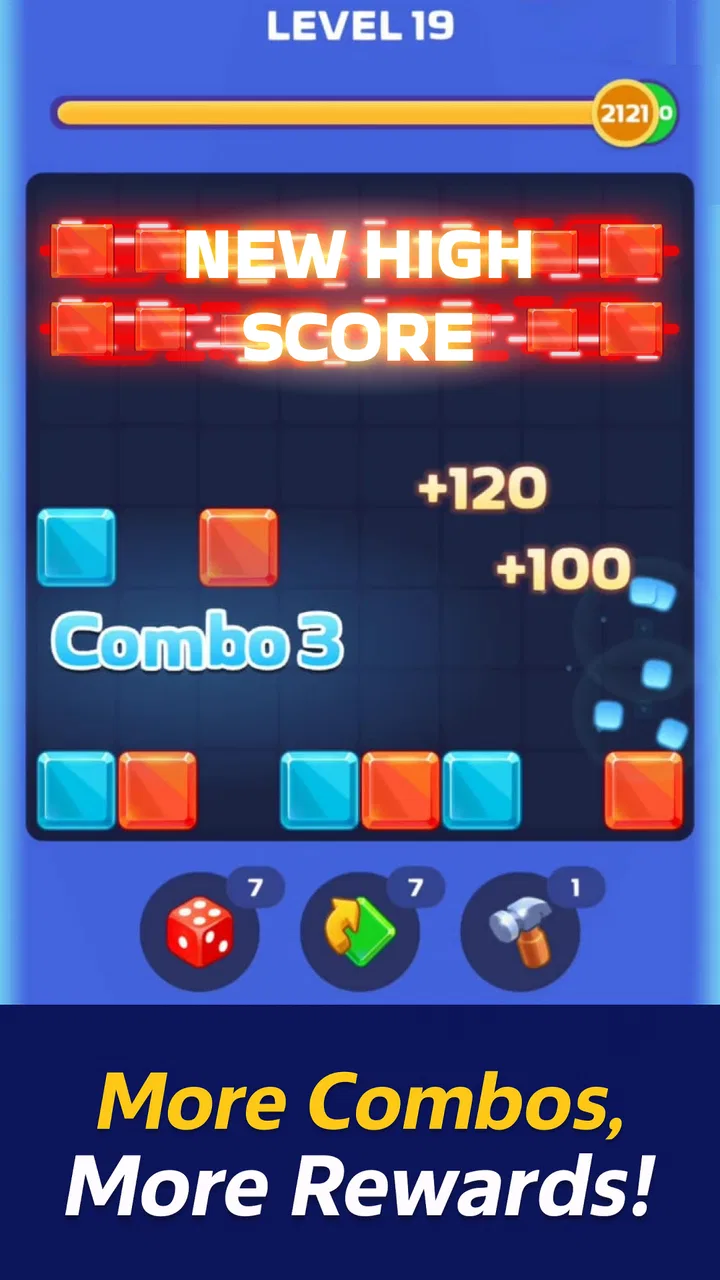
The opening appeal comes from the rhythm of placing or matching pieces and watching the board simplify. That cycle is familiar to anyone who has played a block puzzle, yet the gem-focused presentation gives the game its own visual identity. I found myself concentrating less on individual moves and more on the shape of the remaining space. A move that clears something immediately may still leave an awkward corner, while a quieter move can prepare the board for a much better chain later.
You May Also Like

 Blood Strike: 2.5 Anniversary
Blood Strike’s Loadouts Turn Every Drop Into a Tactical Gamble
A close look at Blood Strike’s custom loadouts: how fast access to signature weapons reshapes its battle royale rhythm, rewards preparation, and narrows the gap between fights.

 Pandora - Music & Podcasts
Pandora’s Music Is Easy to Start, but Harder to Recover
Pandora’s strength is its low-effort path from a seed to a station. Its weak spot is how much confidence it asks you to place in connection, setup, and quiet recovery.

 8 Ball Pool
 Is Built on Rivalries, Rematches, and Routine
A close look at the rivalries, rematches, shared routines, and unanswered safety questions that turn a quick pool match into a persistent mobile community.

 Samsung Music
’s Quiet Strength Is Playing What You Already Own
Its reach comes less from spectacle than from dependable access to a personal library. That simplicity is both the app’s strongest retention engine and its ceiling.

 AccuWeather: Weather Radar
AccuWeather Review: A Quick, Clear Forecast for Everyday Decisions
For everyday plans, the best forecast is the one you can understand quickly. AccuWeather makes rain timing, radar, and local conditions easy to act on, with a few trade-offs.

 Hill Climb Racing
Why Hill Climb Racing Still Turns Crashes Into One More Run
A tiny car, a bumpy hill and one more upgrade: Hill Climb Racing keeps resurfacing because its simple chaos makes every near-miss feel personal.
More From Our News Desk



That is the first useful lesson I took from playing: do not treat every available match as equally valuable. When the board offers several possible clears, I try to preserve flexible spaces rather than filling the center too quickly. Open areas give later pieces more options, while a nearly sealed edge can turn an otherwise promising round into a forced sequence. This habit matters more than simply reacting to the most colorful or obvious match.
The controls and basic presentation are best suited to casual play. I could imagine opening it while waiting for transport, taking a few turns during a coffee break, or using it as a low-pressure way to reset after work. It does not demand the emotional investment of a competitive multiplayer game or the uninterrupted time of a large adventure. The trade-off is that players who need a strong sense of progression may find the core loop repetitive unless they already enjoy optimizing board positions.
One of my favorite practical approaches is to pause briefly before committing a move. In fast puzzle games, I often make a match simply because it is available. Here, that instinct can be costly. I look at the next likely spaces, identify which area is hardest to recover, and only then decide whether the immediate clear is worthwhile. This is not a complicated system, but it changes the game from random tapping into a small planning exercise.
Small decisions matter more than quick clears
The most satisfying rounds are not necessarily the ones with the largest-looking action. They are the rounds where I keep the board adaptable. I try to avoid building tall, narrow stacks unless the move clearly creates room elsewhere. I also watch the edges, because corners can become dead zones when the available shapes do not fit naturally. These are simple observations, but they are the kind of details that separate a relaxing session from a frustrating one.
Another useful routine is to identify a “safe” area before making a risky move. If the board is already crowded, I prefer a placement that leaves at least one broad region open rather than one that produces a dramatic clear but divides the remaining space. This approach may reduce immediate excitement, yet it gives me more control over the next few turns. For players who usually lose because they rush, slowing down is probably the most effective improvement.
I would not describe the game as demanding in the same way as a deep traditional board game. There is no need to memorize a large rule set or study an opponent’s long-term plan. Its challenge comes from spatial judgment under pressure. That makes it accessible to newcomers, but it also means experienced puzzle players may reach the limits of the basic idea sooner than they would with a game that introduces several distinct mechanics.
Where progress can begin to feel like pressure
Free puzzle games often have a delicate balance between encouraging another attempt and making the player feel pushed toward spending. With Block Blitz: Gems Puzzle, the confirmed purchase range runs from $1.50 to $17.99 per item. That is enough to make spending part of the decision for anyone who plays regularly, even though the game itself is free to download.
I think the right way to approach it is to start without assuming that purchases are necessary. Play several sessions and decide whether the basic loop is enjoyable on its own. If I am already having fun with the board decisions, I can judge any optional purchase more calmly. If the game only feels satisfying when I am trying to overcome a restriction, that is a warning sign for my own spending habits, regardless of how attractive the item may appear.
The price range also means that different players may experience the game differently. Someone who never buys anything can treat it as an occasional puzzle, while a committed player may be more tempted by repeated small purchases or a larger one-time item. I would not call that automatically unfair, but it makes personal limits important. A simple rule works well for me: I do not buy anything during a frustrating streak, because that is when a purchase is most likely to feel like a solution rather than a considered choice.
There is a practical reason to use that rule. Puzzle difficulty can feel personal even when it is simply the result of a bad board position. After several unsuccessful rounds, I may start believing that progress is blocked when I really need to change my approach. I would rather close the game, return later, and see whether the same obstacle still feels meaningful. That separates a genuine preference for an optional item from an impulse caused by temporary frustration.
What the game can and cannot promise as a competitive experience
I would be careful about treating this as a serious competitive board game. The appeal is primarily in improving my own decisions and trying to clear the board efficiently. Without relying on assumptions about rankings, opponents, or reward systems, I see the fairest comparison as a personal puzzle challenge rather than a contest where every player must have identical tools.
That distinction matters when considering spending. If a player is using purchases to make a personal session more comfortable, the fairness question is mostly about value and pressure. If purchases affect direct competition, the concern would be much stronger. I would not infer such a system without seeing it clearly in the game. For now, my judgement is narrower: anyone interested in a pure skill test should pay attention to whether the available play feels satisfying without buying assistance, and should avoid assuming that a free installation means a completely purchase-free experience.
Compared with a classic physical board game, this is faster to start and easier to carry around, but it does not offer the same face-to-face interaction or tactile satisfaction. Compared with a competitive online puzzle, it is more appealing when I want a private session without needing another person available. Compared with a traditional match-three game, its strongest point is the spatial planning involved in managing open areas and awkward shapes rather than simply chasing a sequence of identical symbols.
That comparison also reveals who may want something else. If I want a game with a clearly defined ending, a campaign, or a rich multiplayer community, I would look beyond this one. If I want a board that I can revisit for a few minutes and improve through better placement choices, it fits much better. The experience depends heavily on whether I enjoy repeating a compact puzzle loop and refining small decisions.
Everyday use: a good five-minute reset, with a few cautions
A realistic use case for me is a short waiting period when I do not want to begin a large game. I can open it, play a few rounds, and stop without needing to remember a story or reconstruct a complicated objective. That makes it useful during a commute or between tasks. The same convenience can become a weakness, though, because “one more round” is an easy promise to make when the board almost works out.
I recommend deciding the length of a session before starting, especially if I am using it late at night. The game’s simple loop makes it easy to continue after a near-success. Setting a stopping point after a certain number of rounds, or stopping immediately after a satisfying clear, helps keep the experience relaxing instead of turning it into an endurance test.
It is also worth considering the age rating. With an Everyone classification, the game is positioned as broadly accessible, which suits its uncomplicated board concept. Adults should still make their own decisions about in-app purchases when sharing a device with younger players. A free game with purchasable items deserves the same basic spending awareness as any other mobile title, particularly when a child may be tempted by progress-related options.
What I would check before committing to regular play
The game was released on December 3, 2024, and the current version is 0.215. Those details tell me that the product is relatively early in its life compared with long-established puzzle games. I would therefore judge it by the enjoyment available now, rather than by assuming a particular future direction. A newer game can feel fresh, but its long-term appeal depends on whether the content and challenge continue to hold attention.
I would also make sure the phone or tablet is compatible before getting invested. It requires Android 7.0 or later, so most modern Android devices should be covered, while older hardware may not be. For iOS readers, the sensible step is to check the current compatibility information on the relevant store before downloading. I would not choose a device or operating system based on the game alone, but this requirement is useful to know if an older phone is being used.
The developer, OVIVO Games, gives the title a clear identity, but I would still focus on the actual playing experience rather than the developer name. The most important questions for me are whether the board remains interesting after the novelty fades, whether I can enjoy it without spending, and whether the difficulty feels like a challenge I can learn from rather than a wall I must pay around.
There are also a few unknowns that I would keep in mind without turning them into accusations. The listed purchase range confirms that paid items exist, but it does not by itself explain how often they appear, how essential they are, or how they affect a particular player’s progress. I would inspect the in-game purchase screens carefully, read each description, and avoid buying until I understand what I am receiving. That is a more reliable approach than guessing from the existence of purchases alone.
My trust verdict after weighing enjoyment against spending
My overall view is positive but measured. Block Blitz: Gems Puzzle works best as a casual board puzzle for people who like arranging pieces, protecting open space, and improving through repeated attempts. Its free entry point and Everyone rating make it easy to try, while its compact format suits short breaks. The game has enough decision-making to avoid feeling completely mindless, particularly when I stop chasing immediate clears and start planning around the shape of the board.
At the same time, I would not recommend it blindly to someone who dislikes repeated attempts or feels uncomfortable around in-app purchases. The presence of items priced between $1.50 and $17.99 means I would establish a spending boundary before playing regularly. I also would not choose it over a deeper strategy title, a social board game, or a story-driven puzzle adventure. Those alternatives are better when I need variety, interaction, or a stronger sense of destination.
For me, the trust verdict is simple: it is worth trying as a free puzzle, but it should be evaluated on the quality of its no-purchase sessions. If the basic board decisions are already enjoyable, the game can be a pleasant daily distraction. If the main motivation becomes escaping frustration or chasing progress through purchases, I would step back. The best way to enjoy this game is to treat spending as optional, not as part of the puzzle’s solution.
I would recommend it to a friend who wants a lightweight matching and block-clearing game with a little more spatial thought than simply tapping the first available combination. I would suggest skipping it to anyone looking for a fully transparent, long-form strategy experience or a game built around direct competition. In the right setting, it is an easy title to pick up and a surprisingly thoughtful way to fill a few minutes.
FAQs for Block Blitz: Gems Puzzle
01What is Block Blitz: Gems Puzzle, and how does it work?
Block Blitz: Gems Puzzle is a captivating puzzle game where players aim to fit various gem-shaped blocks into a grid. The objective is to clear lines by strategically placing blocks, which disappear once a line is completed. With its intuitive drag-and-drop controls, the game is accessible to players of all ages, offering a perfect blend of strategy and fun.
02Is Block Blitz: Gems Puzzle free to play, or does it require in-app purchases?
Block Blitz: Gems Puzzle is free to download and play. However, it offers optional in-app purchases that enhance the gaming experience. Players can buy power-ups or additional game modes, but these purchases are not necessary to enjoy the core gameplay. The game is designed to provide a satisfying experience regardless of spending.
03What devices and operating systems support Block Blitz: Gems Puzzle?
Block Blitz: Gems Puzzle is available for both Android and iOS devices. It supports a wide range of smartphones and tablets, ensuring compatibility with most modern devices. To ensure optimal performance, it is recommended to have the latest version of the operating system installed on your device, whether it’s Android 6.0 or iOS 11.0 and above.
04Are there any ads in Block Blitz: Gems Puzzle, and can they be removed?
Yes, Block Blitz: Gems Puzzle includes ads that appear intermittently during gameplay. These ads help keep the game free for all users. Players can choose to remove ads by making a one-time in-app purchase, which offers an uninterrupted gaming experience. This option is ideal for those who prefer an ad-free environment.
05Does Block Blitz: Gems Puzzle require an internet connection to play?
Block Blitz: Gems Puzzle can be played offline, making it perfect for on-the-go entertainment without the need for a constant internet connection. However, certain features like leaderboards or purchasing in-app items will require connectivity. This flexibility ensures that players can enjoy the game anytime, anywhere.
Pros
- Engaging and challenging gameplay.
- Smooth and intuitive controls.
- Visually appealing graphics.
- Regular updates with new levels.
- Minimal ads for uninterrupted play.
Cons
- Limited free hints available.
- Requires internet for some features.
- Occasional in-app purchase prompts.
- Can be battery intensive.
- Limited customization options.

Block Blitz: Gems Puzzle
Gallery